We ran a feast called “On Ilkla Moor” a few times on our farm. The first one was with much help from the Abbotsford Household, which got us going with this stuff.
A fair bit of the meat, vegetables and herbs came from our farm, which allowed us to provide unusual meats while keeping the price down.
Subsequently there has been a negative reaction from a few people to the idea of using farm-sourced produce, and we’ve been told it violates SCA policy. I have asked where this policy exists, and nobody has been able to show me.
I think it’s just city folk who are squeamish about where their meat comes from, which makes no sense to country folk. I just flag it in the menu so people can choose not to eat that dish if they are bothered.
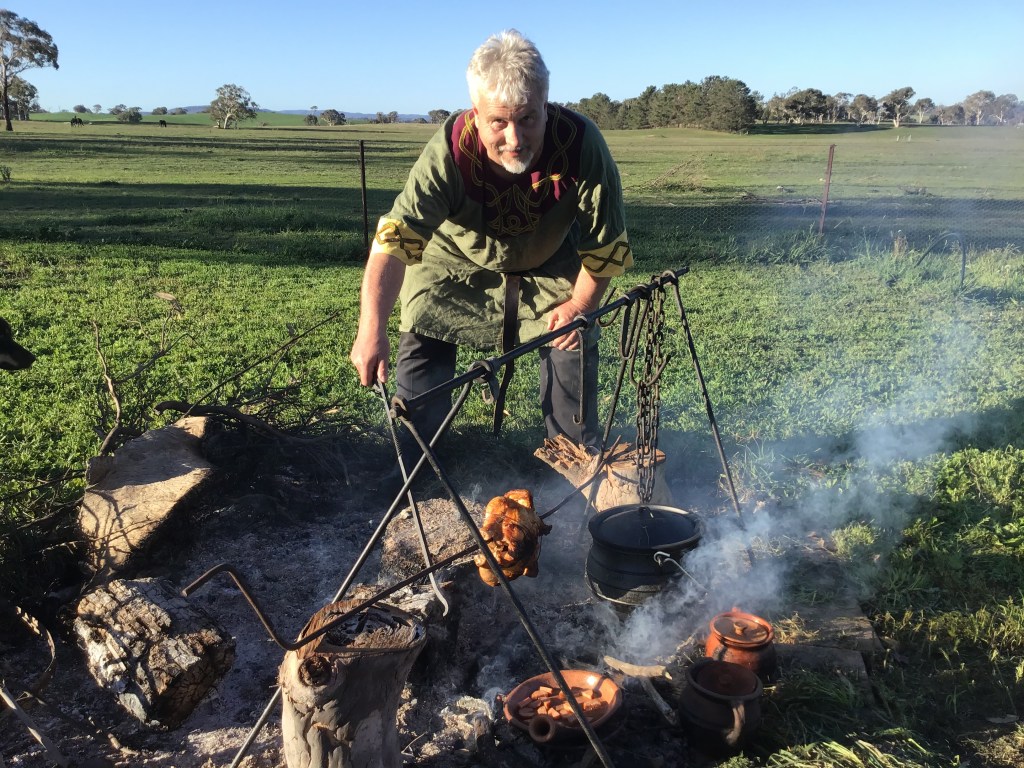
The main thing about campfire cooking is that you need a very small fire, or you burn everything. If you use pottery vessels to cook in, you need to soak them in water first if they’ve been in storage.
The various Ilkla Moors had similar food, so I’ve averaged them together for the sake of the story. Usually both Alys and I were cooking, sitting around the fire. We encourage others to help with chopping and grinding things.
Potje stew – the cauldrons we buy are made in South Africa, where the Dutch brought this style of cooking and people still do these when camping. Brown your meat and onions, add a small amount of (stock/wine/beer), then pile tough vegetables on next, then lighter ones, finishing up with greens and spices. Steam as is, without stirring, on the edge of the fire, for a couple of hours.
Funges – mushroom pottage with onions – extra good when we can collect our own field mushrooms.
Mawmenee – peacock stew with wine and dates – a very popular dish.
Rabbit with mustard – you fillet the rabbits, brown them in a cauldron, add onions and carrots, then move to edge of the fire. Stir in honey and mustard and salt towards the end.
Chicken – cooked on the spit, with a sauce of sage and vinegar.
Macrows – homemade pasta, included in Forme of Cury. We did this once ourselves by guessing, then a Swiss visitor made “chnöpfli”. They use 500g flour, 6 eggs, 2 tsp salt. Make a dough, let it rest for an hour. Make it into a roll and then cut long, thin pieces off the end, drop in the water and pull out when they’ve floated for a bit. Stir in some butter, and it’s a popular side dish for the rich stews.
Caboches in Potage – quartered cabbages cooked in stock with onions and leeks. Good vegie dish, which you can put off to the side and leave to steam.
ME cooking for our Okewaite online feast during COVID lockdown, on the little home set (a lovely wedding gift from our friends Darrell and Lisa):
 Food for the Feast